


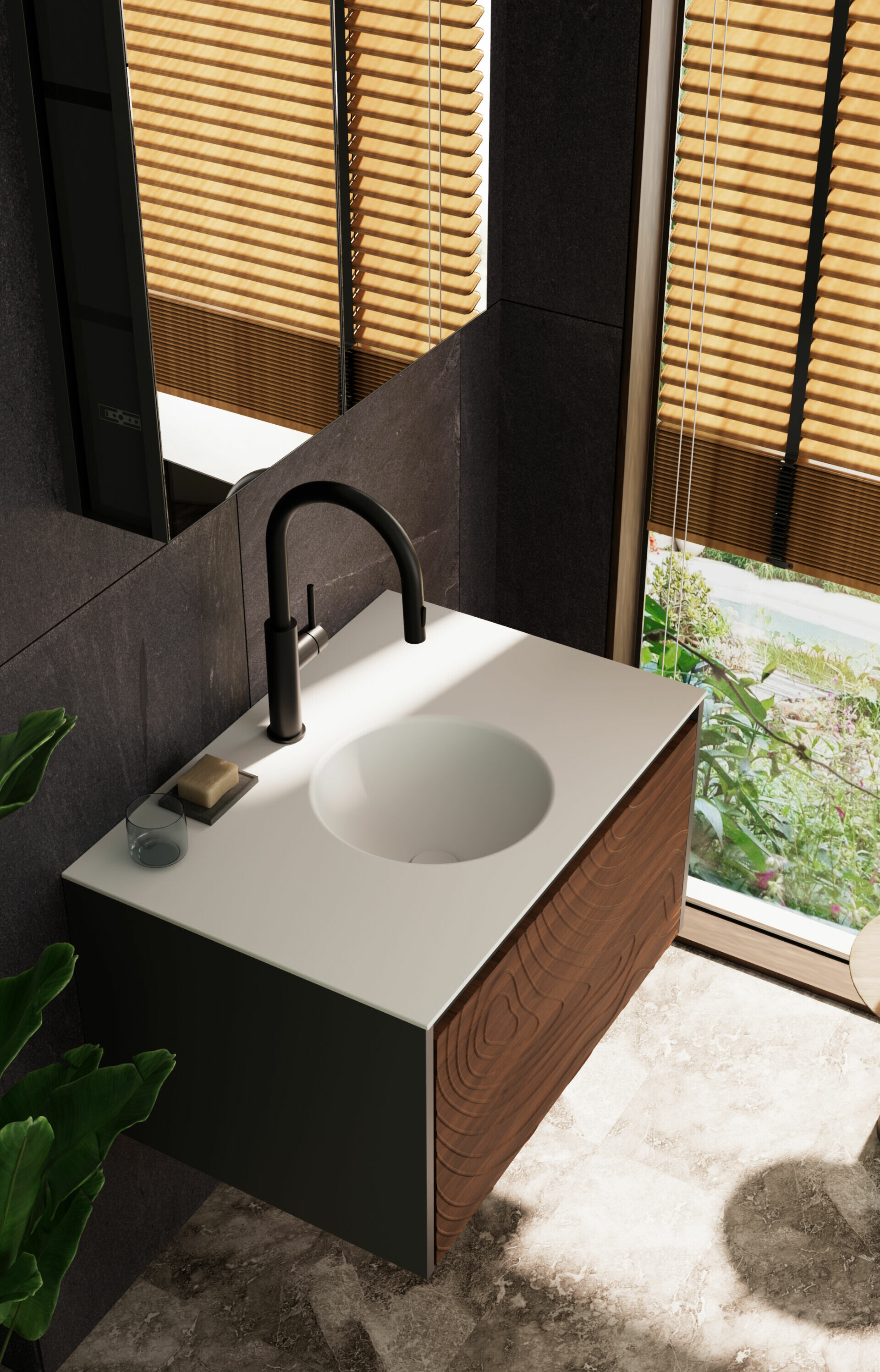
General Washbasin FAQ
Q: What materials are available for bathroom sinks, and how should I choose?
A: Common materials include ceramic, engineered stone, stainless steel, and quartz. Ceramic is the most popular choice—durable, easy to clean, and affordable. Engineered stone offers diverse shapes and a premium feel but is more prone to scratching. If you prioritize superior durability and a stylish design, sintered stone sinks have become a trendy choice in recent years.
Q: What are the differences between sink installation methods?
A: The main types are "above-counter" (versatile shapes, easy to clean the countertop), "undermount" (sleek countertop cleaning, though the rim seam requires waterproofing attention), "integrated" (countertop and basin are one piece; seamless and easiest to clean), and "wall-mounted" (ideal for small bathrooms to save space). Choose based on your available space and cleaning habits.
Q: How do I select the right sink size for my bathroom?
A: First, verify the available width and depth of your bathroom or vanity cabinet, and ensure compatibility with the drain pipe and faucet hole placement. A standard single basin is typically 60–80 cm wide.
Q: What should I do if the sink clogs easily or drains poorly?
A: Common causes include the buildup of hair, soap scum, and limescale in the P-trap or drain assembly. It is recommended to use a drain hook regularly to remove hair and flush the pipes with hot water or a cleaning agent every 1–2 months. If drainage issues persist, you may need to disassemble and clean the P-trap or hire a plumber to locate and clear the blockage.
Q: What should be kept in mind for the daily maintenance of the washbasin?
A: It is recommended to wipe away water droplets with a soft cloth after each use to prevent limescale buildup caused by standing water. Avoid placing sharp objects directly on the basin or subjecting the surface to impacts from heavy items. When cleaning, use a neutral detergent with a soft cloth or sponge; do not use steel wool or abrasive cleaning powders, as these can scratch the glaze or cause the surface to lose its luster.
Sintered Stone Washbasin FAQ
Q: How do sintered stone washbasins differ from standard ceramic or engineered stone ones?
A: Sintered stone washbasins are crafted using high-temperature sintering technology, combining natural stone aesthetics with advanced material science. They offer exceptional durability and a modern design. Their high-density structure and low water absorption rate make them a popular choice for bathroom surfaces in modern homes, hotels, and high-end spaces. Unlike ceramics—which are prone to glaze aging—or engineered stone—which is susceptible to scratches—sintered stone holds a distinct advantage in terms of hardness and stain resistance.
Q: Do sintered stone washbasins really resist water absorption and staining?
A: Yes. The surface is dense and impermeable, offering excellent resistance to moisture, mold, and stains. Even if dark liquids like coffee or soy sauce are spilled, they are unlikely to penetrate or leave stains if wiped up promptly, and the material is less prone to mold growth over time.
Q: Are sintered stone washbasins scratch- and wear-resistant? Will accidental scratches occur during daily use?
A: Sintered stone is produced via high-temperature sintering (over 1200°C), resulting in a dense, hard structure that resists wear and scratches. It is highly durable; everyday actions—such as placing down a toothbrush holder or routine cleaning and scrubbing—are unlikely to leave visible scratches, making it more resilient than engineered stone or glossy ceramics.
Q: Will rinsing the sintered stone washbasin with hot water cause any damage?
A: No. Sintered stone withstands high-temperature water and common heat sources without deforming or discoloring. You do not need to worry about surface damage during daily activities such as rinsing with hot water or using hair styling tools.
Q: Is the cleaning and maintenance of sintered stone washbasins troublesome?
A: Not at all. The surface of sintered stone is smooth and fine, making it resistant to stains. Daily cleaning is simple and convenient—usually just a wipe with a soft cloth suffices—and unlike natural stone, it does not require periodic waxing or special maintenance.
Q: What sizes are available for sintered stone washbasins, and what kind of bathrooms are they suitable for?
A: Integrated sintered stone basins come in a wide range of sizes, from 60cm to 180cm (including 60, 70, 80, 90, 100, 120, 130, 140, 150, 160, and 180cm). Options include round basin and wall-mounted styles, as well as a 150cm double-basin model; you can select the appropriate size based on the bathroom's width and whether a double-user setup is required.
For more sintered stone washbasin styles and specifications, please visit the Küchelit washbasin product page.